Leader and follower: two roles, one dance
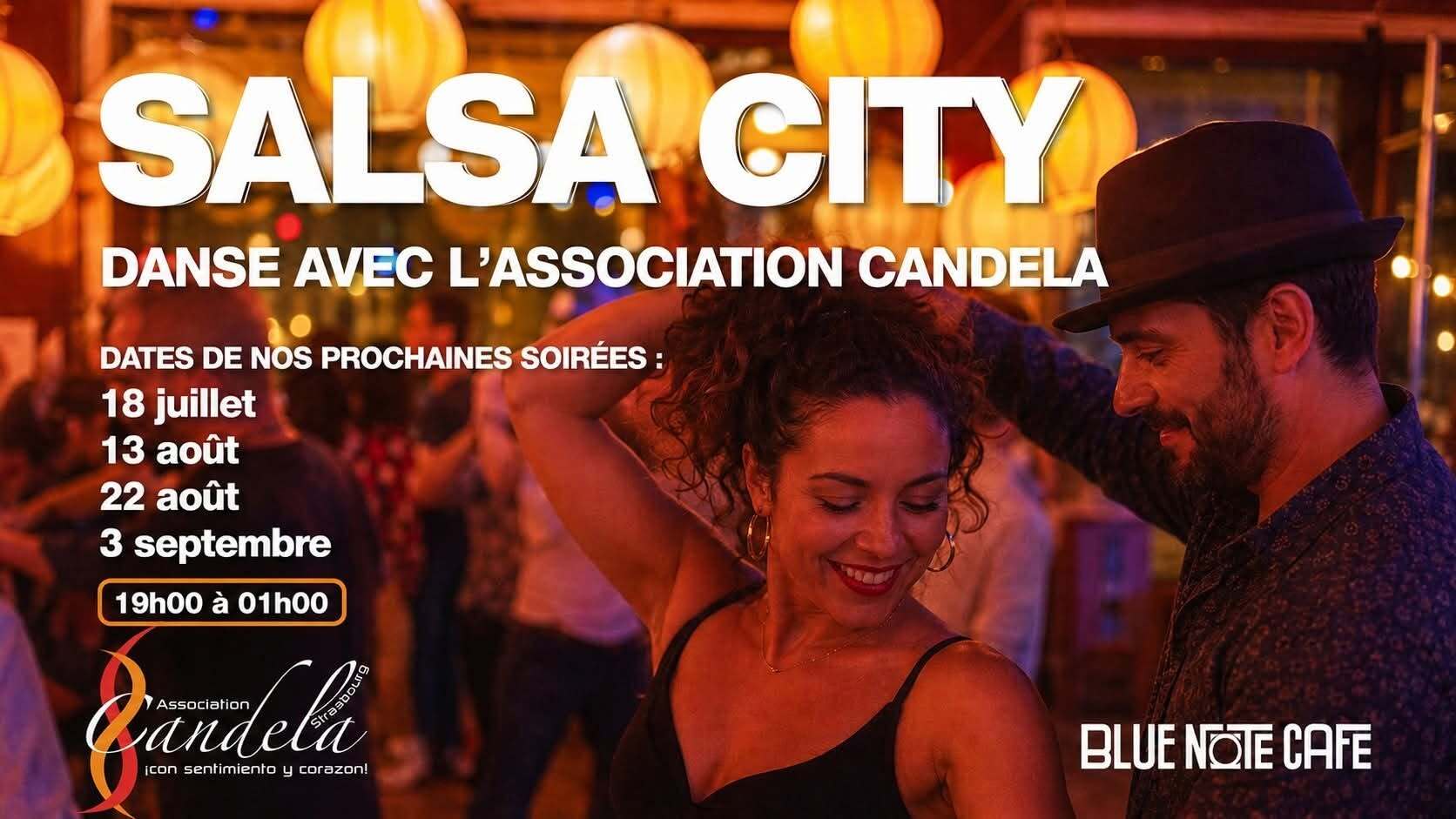
Partner dancing means dancing together. It sounds obvious, but making it truly happen requires something essential: two people need to communicate through their bodies and become, for a few minutes, a dancing partnership.
In Cuban casino, as in many other partner dances, this communication has traditionally been organised around two complementary roles: leader and follower. Historically, the leader role has mainly been danced by men and the follower role by women. But these roles do not have to correspond to gender: anyone can learn to dance as a leader, a follower, or even learn both roles.
The important point is that this is not about deciding who commands and who obeys. It is a distribution of roles that allows two bodies to coordinate without having to verbally agree on every movement.
On the one hand, there is dance technique, from posture, attitude and the execution of the steps to the theatricality of each style. The aim is to recognise and respect traditions. You do not need to be a folklorist to know that every contemporary dance and rhythm has a history. Through their dancing, dancers honour all those couples who came before them and helped forge what we now recognise as distinct styles.
On the other hand, there is musicality: an understanding of musical timing and the different ways of expressing it, which have themselves evolved alongside the historical transformations of the music.
Both components, dancing and musicality, can be learned and trained. To begin, the first step is to choose a role.
Leader: proposing, guiding and creating
The leader has the responsibility of taking the initiative. The leader listens to the music, decides when to initiate a figure and communicates that intention through the body, movement and points of connection with the partner.
Good leading does not mean using force to make the follower perform a movement. Quite the opposite: a good lead should be clear enough for the intention to be understood and flexible enough to allow a response.
The leader role also involves initiative and creativity. With experience, the leader gradually stops thinking of the dance as a sequence of memorised figures. Different possibilities can be selected, combined and adapted to the available space, the music and the person with whom they are dancing.
This makes leading a particularly stimulating challenge: listening to the music while thinking about the partner, anticipating movement and progressively constructing the dance.
Follower: listening, interpreting and responding
But none of this works without the follower. And following does not mean being passive.
The follower must perceive the indications communicated by the leader, interpret them and respond through the body while maintaining their own balance, rhythm and presence in the dance. Good connection can even communicate back to the leader that a proposal has been understood, that it needs to be clearer or that another possibility exists within the movement.
The follower therefore participates actively in constructing the dance. A follower can mark or accent the beat, play with musicality, use the space left by the lead and develop their own style and bodily expression. With experience, followers can introduce variations, rhythmic play and responses that enrich what the leader initially proposed.
A kind of friendly challenge can even develop between the two partners: one proposal receives an unexpected response, one musical game triggers another, one bodily expression finds its reply. This is precisely where dancing stops looking like a sequence of figures and becomes a genuine dialogue.
Different responsibilities, not a hierarchy
Leaders and followers do not perform exactly the same function. If both partners tried to initiate incompatible movements simultaneously, maintaining a clear connection would become difficult. The distribution of roles provides a common structure from which they can dance together.
But different functions do not mean different importance. The leader needs to develop clarity, initiative, anticipation and adaptability. The follower needs to develop bodily awareness, sensitivity, responsiveness, autonomy, musicality and expression.
The result depends on both dancers. An experienced leader cannot create a great dance alone, just as an experienced follower does not need to limit themselves to mechanically executing whatever is proposed. The greater the experience of both partners, the richer their dialogue can become.
Learning both roles
This is also why learning both roles can be particularly valuable. Someone who normally dances as a follower discovers what information a leader needs to communicate. Someone who normally dances as a leader discovers how a lead feels from the other side of the partnership. From this perspective, dancing is also empathy in motion.
Learning the other role can improve connection, precision and adaptability. It also makes it possible to dance with many more people.
From the couple to rueda de casino
Rueda de casino takes this principle of communication to a collective level. Cuban professor and researcher Graciela Chao Carbonero, a specialist in Cuban folk dances, explains that in the historical development of rueda, several couples form a circle and perform coordinated figures under the direction of a caller.
There are now two different levels of communication. Within each couple, the leader proposes and guides while the follower interprets and responds. At the same time, both listen to the person calling the rueda, who announces the figures and coordinates the whole group.
The need to perform figures simultaneously was precisely one of the reasons for naming them. Figures such as Enchufla, Vacílala, Setenta and (Ponle el) sombrero could thus be called and transmitted. Dancers and leaders could also create new figures that subsequently circulated among different ruedas.
And perhaps one day, calling the rueda
For someone dancing as a leader, an additional challenge then becomes possible: learning not only to lead a partner but also to call the rueda. In addition to verbal calls, the caller can use hand or arm signals to make certain figures easier to identify.
Calling a rueda means observing the group, choosing figures, announcing them at the appropriate moment and sufficiently in advance, and maintaining the relationship with the music while continuing to dance with your own partner. It requires attention, memory, rhythm, creativity and adaptability. Rueda also has an important playful dimension: some figures and calls exist above all to play, surprise one another and have fun together.
Cuban researcher Bárbara Balbuena Gutiérrez, a Doctor of Sciences on Art and specialist in Cuban dance folklore, has studied casino from its origins, including its steps, turns, figures and partner and group formations. Her work places these practices within a Cuban cultural tradition in which dancing involves much more than mechanically reproducing a series of steps.
Leaders and followers therefore have different but complementary responsibilities. One proposes without imposing; the other interprets without merely obeying. Both listen, respond, adapt and bring their own personality to the dance. And when that communication works, two people stop simply performing figures and truly begin to dance together.
Music is the common language, and musicians are also part of this dialogue. Dancing to live music makes the relationship between those who produce the music and those who interpret it through their bodies particularly visible: musicians and dancers can listen to, respond to and influence one another. When the music is recorded, the DJ occupies another essential place in this relationship: selecting and connecting the music, shaping the continuity of the night and creating the conditions in which this dialogue between music and dance can begin again with every song.
Further reading
Bárbara Balbuena Gutiérrez, Salsa y Casino: de la cultura popular tradicional cubana, Balletin Dance Ediciones, 2010:
View the book on Google Books.
Graciela Chao Carbonero, research on the historical development of Cuban popular dances and rueda de casino:
Federal Council of Folklore of Argentina (COFFAR).
Dancing together, building a dialogue
Leader, follower: the roles that bring Cuban dance to life
In Cuban casino, two partners do more than string steps together: they listen, propose, respond and create a conversation in motion together.
Dance as communication
When movement becomes a shared language
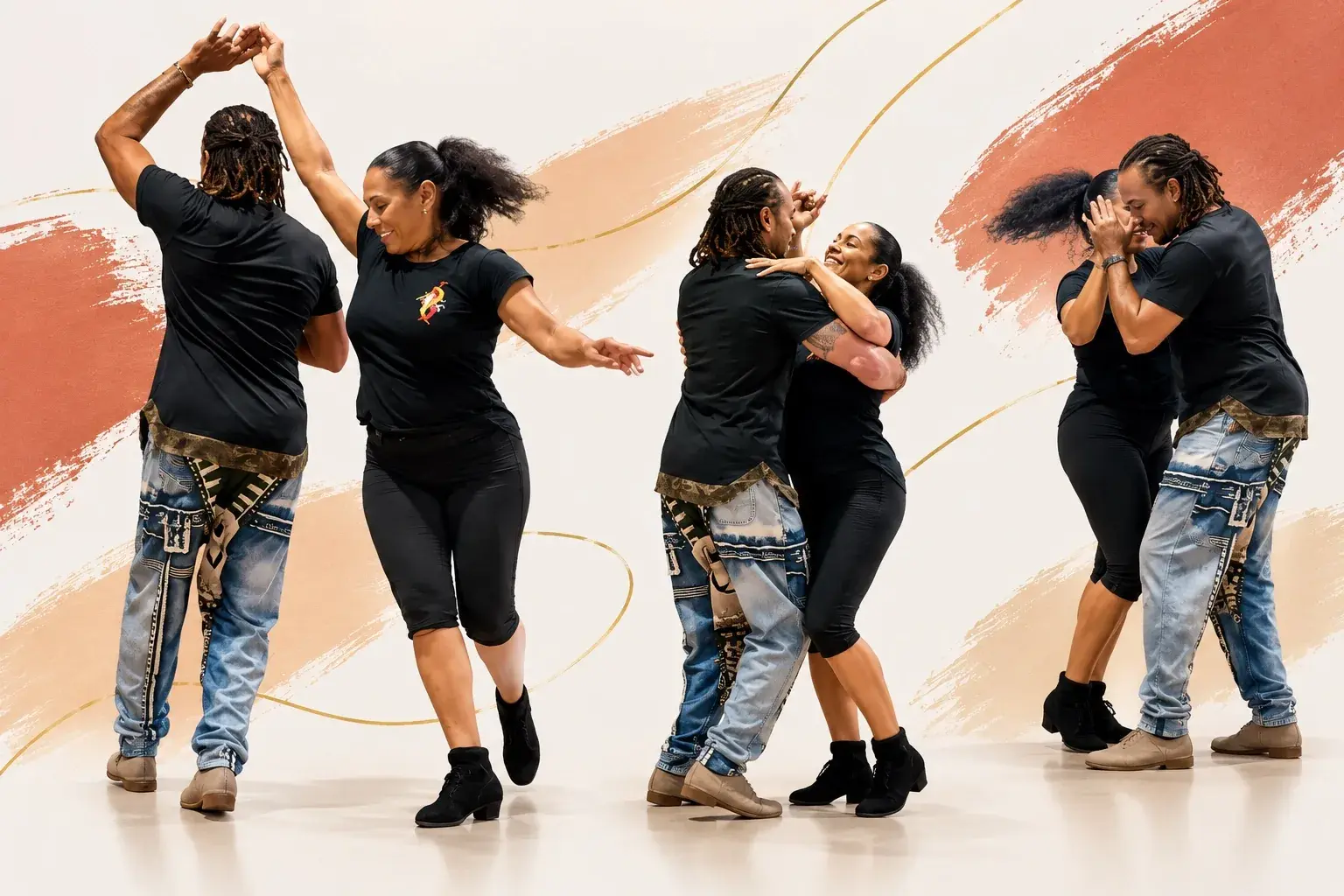
Before it is a sequence of figures, dance is an encounter. In Cuban casino, every step, every change of energy and every glance contributes to a conversation without words. The partnership is built in the moment: a proposal is made, perceived, interpreted and then transformed into shared movement.
This listening also involves musicality. The pulse, accents, silences and instrumental variations give colour to the dialogue. Dancing means inhabiting the music together: finding a shared rhythm within it, making space for the other person and allowing an intention to travel from one body to another.
Listen, respond, be present
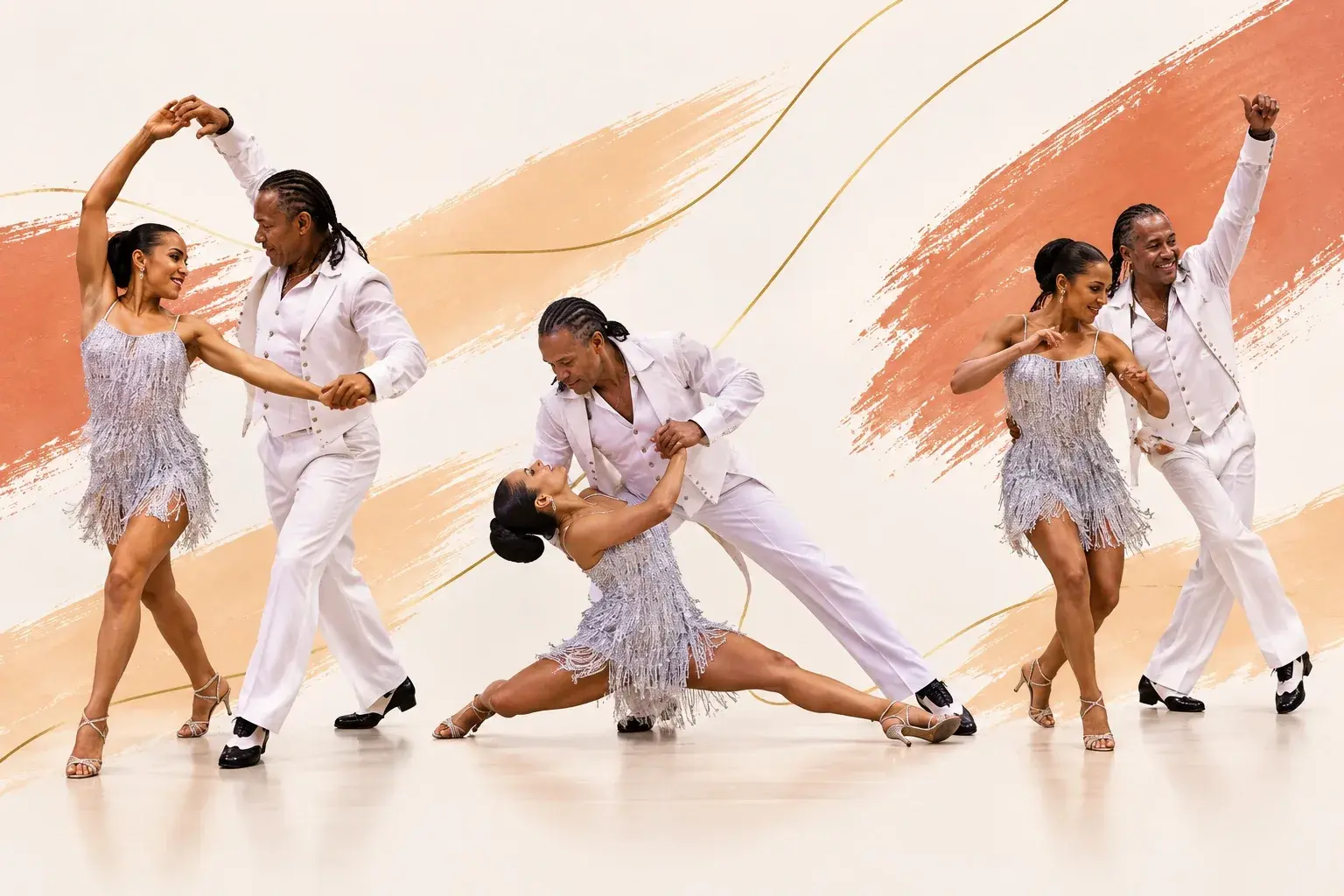
A conversation danced in motion
Between two partners, communication relies neither on force nor on perfect anticipation. It grows from concrete attention: sensing the proposed direction, recognising an invitation, adjusting balance and preserving the other person’s comfort. Contact, posture and gaze become flexible points of reference, always serving the relationship.
Each role is therefore expressed through active listening. One partner may open a possibility for movement; the other gives it a response, a nuance, a presence. This exchange brings the dance to life: rather than reproducing a fixed model, the partners create a distinctive interpretation of the music together.
Musicality connects these exchanges. When partners hear the same accents, breathe through the same pauses or play with the same energy, their dialogue becomes clearer and more enjoyable. The figures then matter less than the quality of listening that runs through them.
This shared presence lies at the heart of Cuban dances: learning to dance also means learning to make space, adapt and contribute fully to a shared experience.
Two roles, one dialogue
Leader: proposing, guiding and creating
Propose directions clearly, without forcing
Lead through attentive, comfortable connection
Create variations in service of the music
Listen to your partner’s responses
Adapt your intention moment by moment
Follower: listening, interpreting and responding
Listen to the proposal, the music and the movement
Interpret through your own bodily sensitivity
Respond with precision, presence and creativity
Enrich the dance through your style and musicality
Turn connection into a shared dialogue
“But different functions do not mean different importance.”
In partner dancing, equality is built through listening, trust and each partner’s freedom.
Changing perspective
Learning both roles means discovering dance from the other side of the connection.
From the couple to rueda de casino
Dans la rueda de casino, la relation à deux s’ouvre à un cercle de danseurs et de danseuses qui avancent ensemble, au même rythme. Chaque couple conserve son dialogue, mais il devient aussi attentif à une pulsation collective : une annonce circule, les partenaires changent, les trajectoires se répondent et le groupe dessine une danse en mouvement.
Les figures comme Enchufla, Vacílala, Setenta ou (Ponle el) sombrero ne sont pas de simples enchaînements à mémoriser. Elles deviennent des repères partagés, des chemins connus que la rueda transforme selon la musique, l’énergie du cercle et la précision de chacun. La circularité n’efface pas les individualités : elle leur donne un espace commun pour se rencontrer.
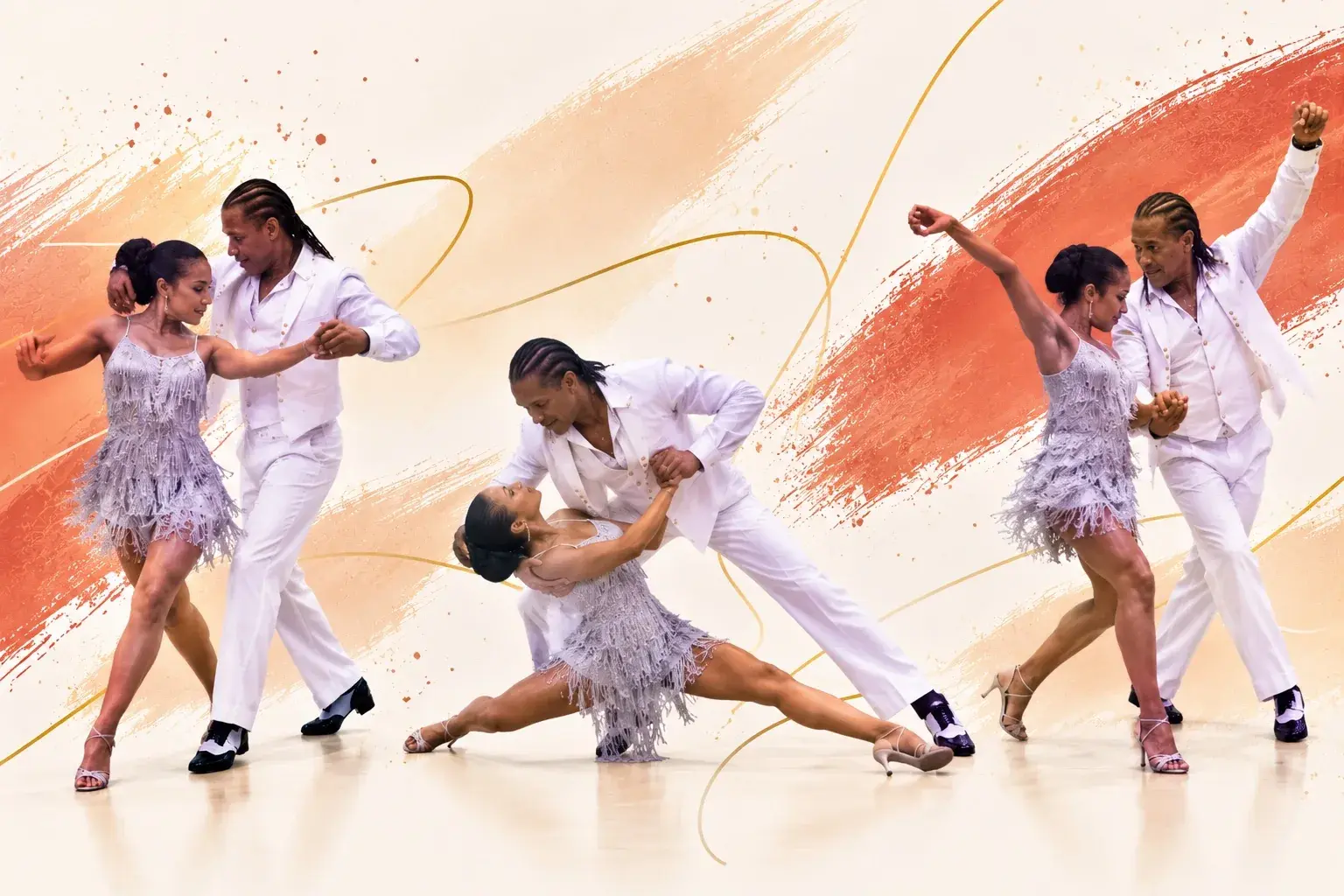
And perhaps one day, calling the rueda
Shared attention in collective dance
Dancing a rueda requires a broader field of attention. It is no longer only about sensing your partner, but about remaining responsive to the whole: the guiding voice, neighbouring couples, the tempo and changes of position. This collective listening makes rueda both joyful and demanding, with coordination built step by step.
Observer ce qui se passe dans le cercle, choisir le bon moment, annoncer avec clarté, écouter la réponse du groupe et s’adapter lorsqu’un détail change : ces actions forment une véritable conversation dansée. Elles invitent à développer une présence attentive plutôt qu’à rechercher une exécution parfaite.
Les travaux de Graciela Chao Carbonero et de Bárbara Balbuena Gutiérrez rappellent que les pratiques dansées cubaines se comprennent dans leurs contextes sociaux, musicaux et collectifs. Aborder la rueda avec cette perspective, c’est reconnaître qu’elle porte une mémoire partagée tout en restant vivante : chaque cercle la renouvelle, par son écoute, sa diversité et son plaisir de danser ensemble.
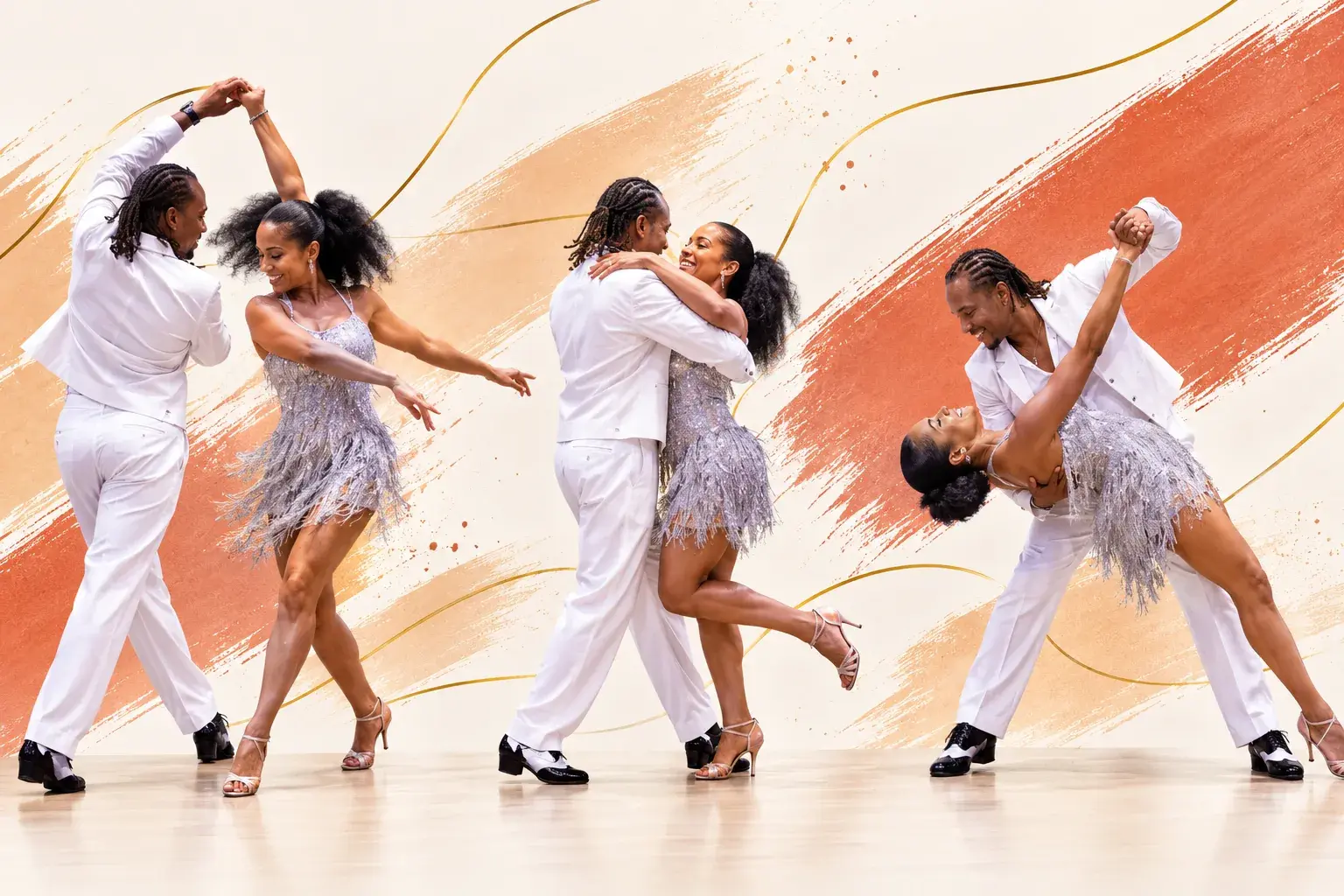
Conclusion: dialogue
L’un propose sans imposer ; l’autre interprète sans se limiter à obéir. Tous deux écoutent, répondent, s’adaptent et apportent leur personnalité. Dans le casino, les rôles ne décrivent pas une hiérarchie : ils organisent un échange. Une intention peut être suggérée, nuancée, prolongée ou transformée par la personne qui la reçoit. C’est dans cet aller-retour que la danse prend du relief, de la confiance et du plaisir.
Apprendre à danser, c’est ainsi apprendre à laisser de la place : à son ou sa partenaire, à l’imprévu, à la respiration de la musique et à sa propre sensibilité. Les figures offrent un vocabulaire ; le dialogue, lui, donne à ce vocabulaire sa voix singulière.
Music is the common language
Music connects the partners long before a step is initiated. Musicians provide the pulse, accents, silences and variations that inspire choices of movement. With live music, this conversation unfolds in the moment: the instruments, vocals and energy of the room can invite dancers to slow down, play, suspend movement or intensify the dance.
The DJ is equally part of this shared listening. Through song selection and sequencing, the DJ creates a musical landscape, accompanies the changing energies of the social dance and opens possibilities for movement. Between the band, the dancers and the partners, music remains the common ground on which everyone can propose, respond and build one dance together.
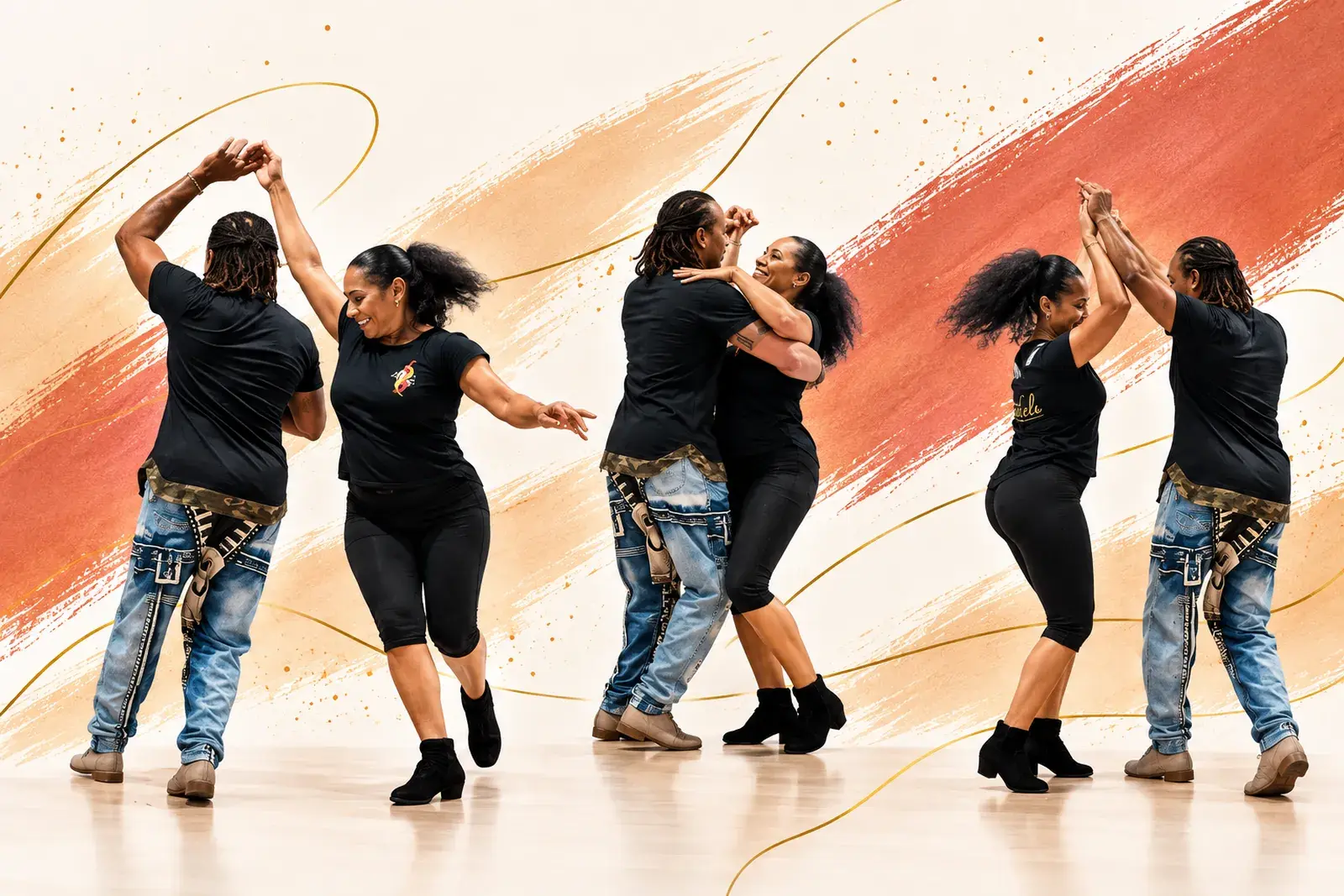
Further reading
- Graciela Chao Carbonero, La rueda de casino: baile social cubano — pour approfondir l’histoire, les codes collectifs et la transmission de la rueda.
- Bárbara Balbuena Gutiérrez, travaux sur les danses populaires cubaines — un éclairage précieux sur leurs contextes culturels et sociaux.
- Fernando Ortiz, La africanía de la música folklórica de Cuba — une référence majeure pour situer les héritages musicaux qui traversent les pratiques cubaines.
- Helio Orovio, Cuban Music from A to Z — repères historiques et lexique autour des musiques de Cuba.
- Vincenzo Perna, Timba: The Sound of the Cuban Crisis — pour comprendre les évolutions contemporaines de la musique cubaine et de la danse sociale.
- Raúl Fernández, From Afro-Cuban Rhythms to Latin Jazz — une mise en perspective des rythmes, des circulations et des influences musicales.
- Écouter les orchestres de son, chachachá, mambo, salsa cubaine et timba en prêtant attention aux breaks, aux montunos et aux changements d’énergie.
- Observer comment les partenaires dialoguent avec la musique : rythme, silences, accents, qualité du mouvement et espace partagé.
- Travailler indifféremment le rôle de leader, de follower ou les deux, afin d’affiner l’écoute et la compréhension du couple dansé.
- Explorer les figures de rueda — Enchufla, Vacílala, Setenta et sombrero — comme un vocabulaire collectif plutôt que comme une simple succession de passes.
- Privilégier les sources qui citent leurs interprètes, leurs contextes et leurs traditions de transmission.
- Comparer les versions dansées d’une même musique pour découvrir la diversité des interprétations possibles.
- Bibliothèque nationale de Cuba José Martí — ressources et catalogues consacrés au patrimoine culturel cubain.
- Casa de las Américas — publications, archives et recherches sur les arts et les cultures de l’Amérique latine et des Caraïbes.
- Instituto Cubano de la Música — actualités et repères institutionnels autour de la création musicale cubaine.
- Egrem — catalogue historique d’enregistrements cubains, utile pour explorer artistes, orchestres et répertoires.
- Discografía de la Música Cubana — pour documenter les interprètes, les albums et les filiations musicales.
- Ateliers, bals et stages de Candela Strasbourg — des occasions de mettre ces repères en pratique, dans l’écoute et le partage.
Bring the dialogue to life on the dance floor
Quel que soit votre niveau, le rôle que vous dansez ou celui que vous souhaitez explorer, poursuivez votre découverte des danses cubaines avec Candela Strasbourg. Cours, pratiques et rueda sont autant d’occasions d’apprendre à écouter, proposer, répondre et danser ensemble dans un cadre attentif, inclusif et collectif.