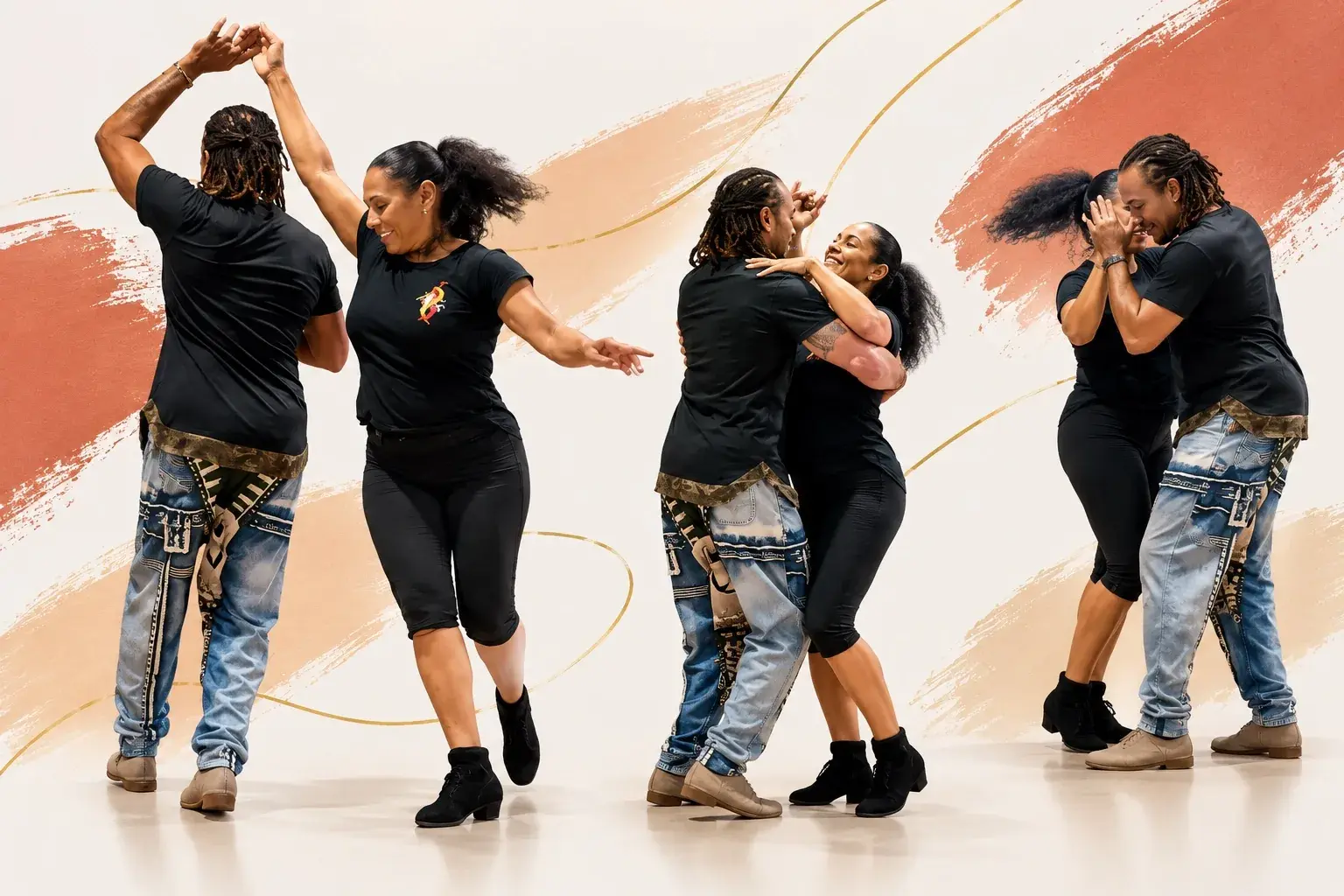
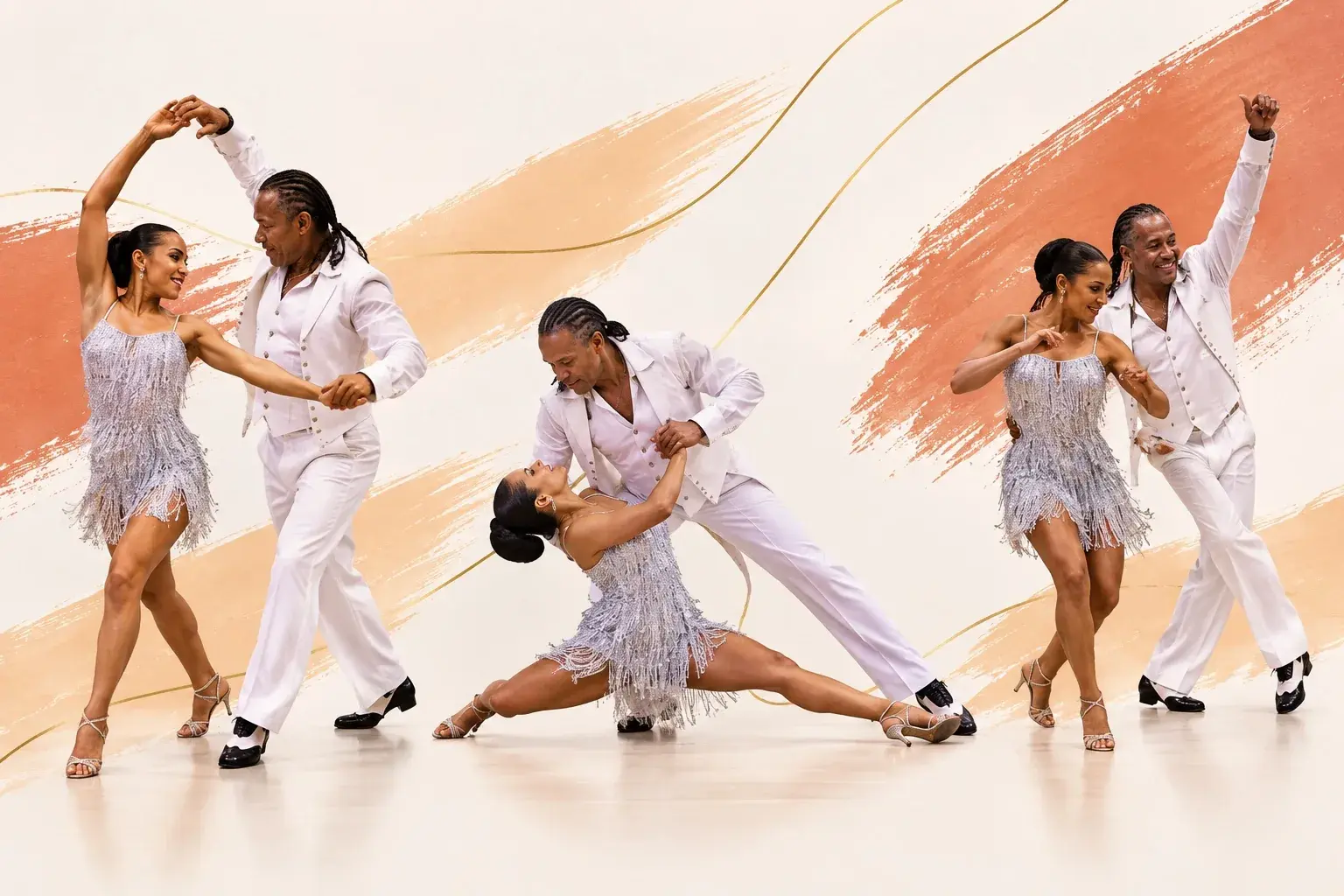
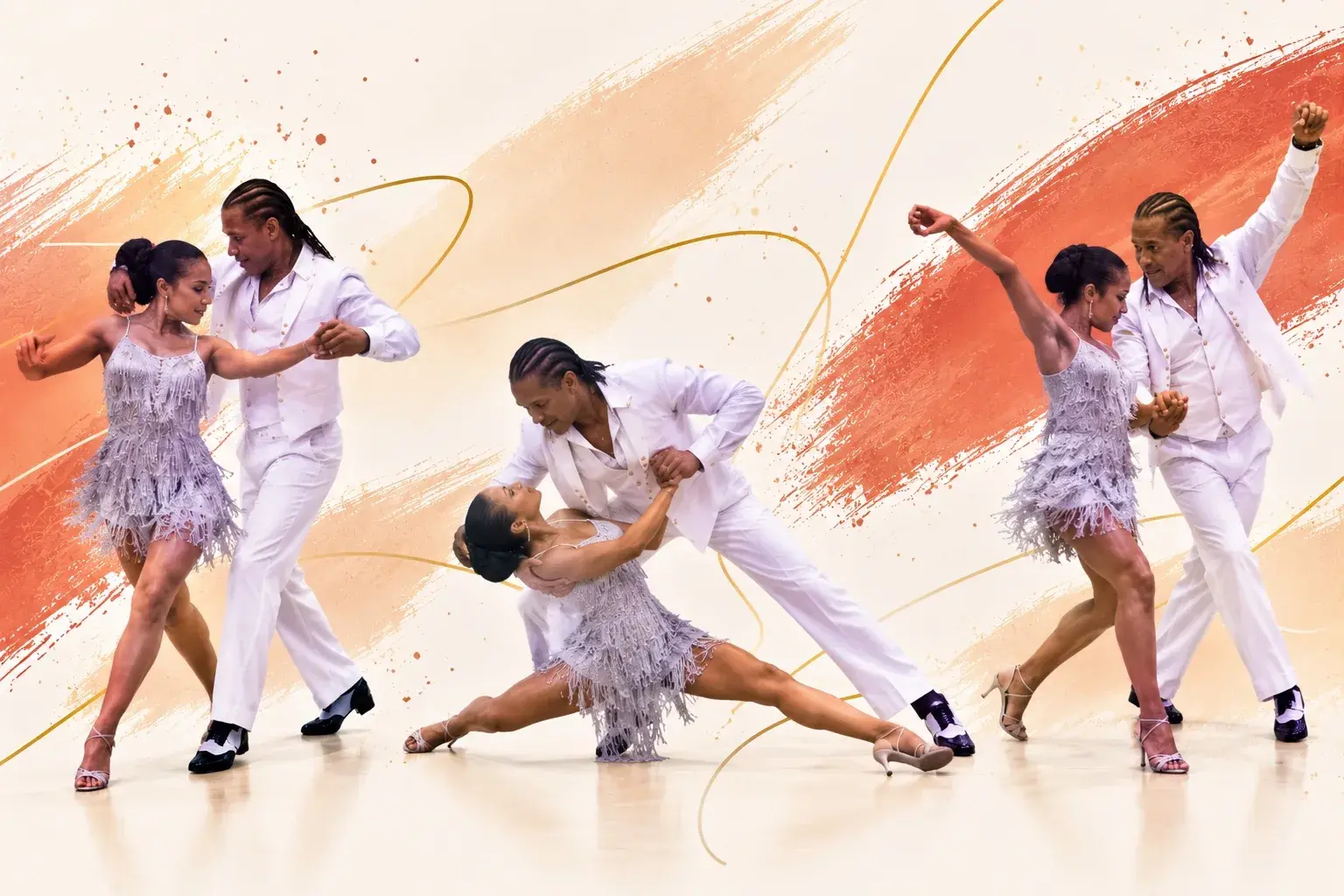
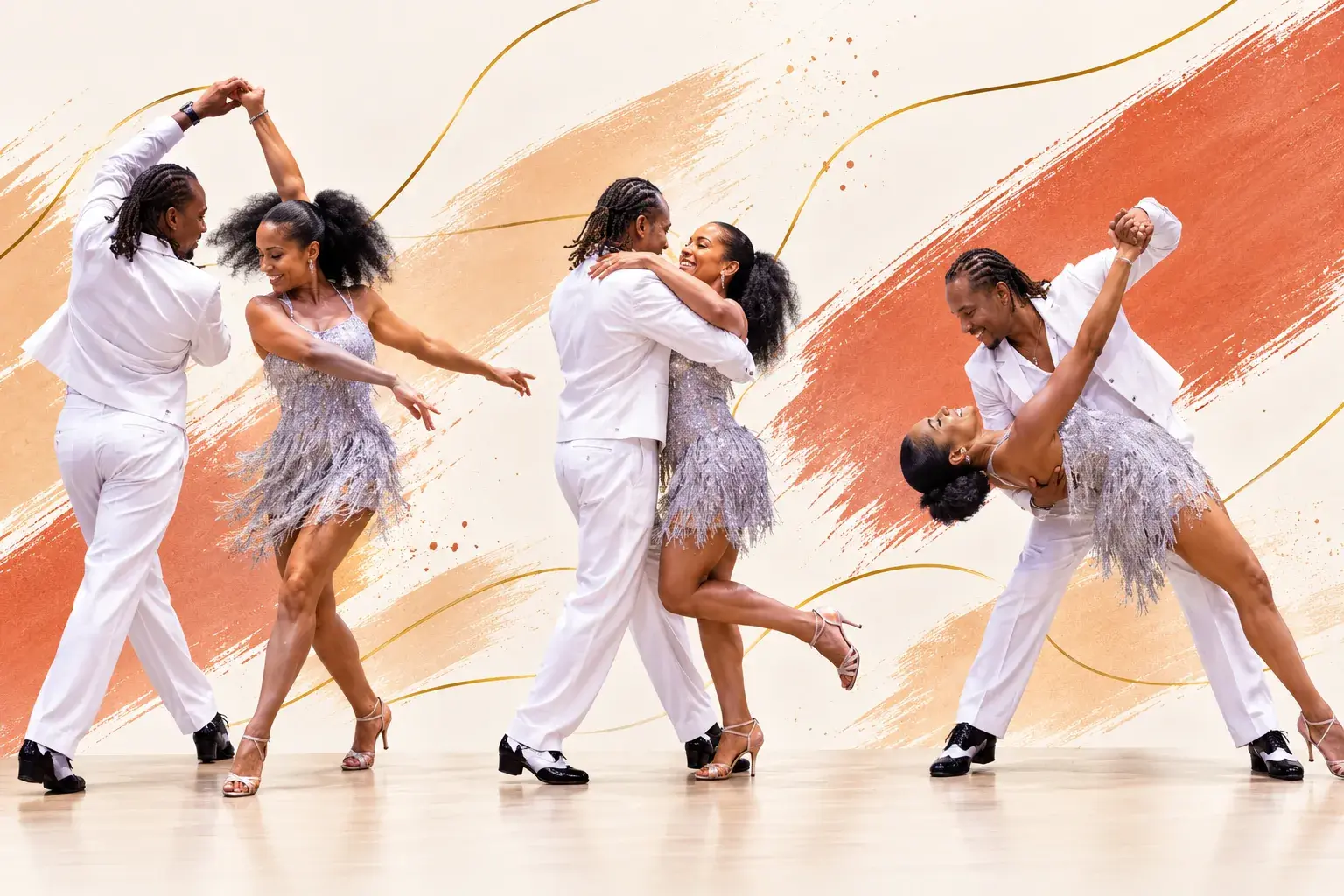
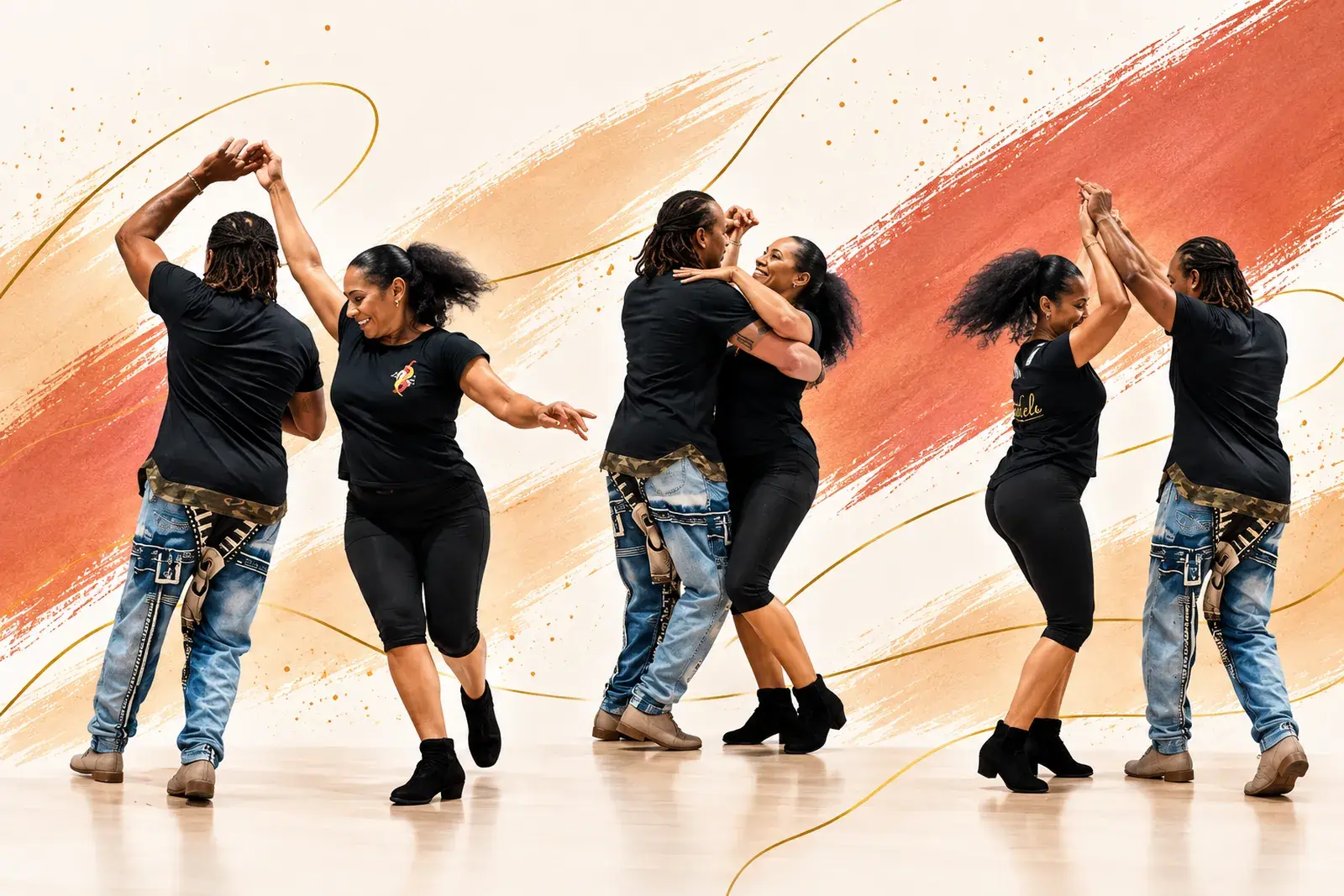
Partner dancing means dancing together. It sounds obvious, but making it truly happen requires something essential: two people need to communicate through their bodies and become, for a few minutes, a dancing partnership.
In Cuban casino, as in many other partner dances, this communication has traditionally been organised around two complementary roles: leader and follower. Historically, the leader role has mainly been danced by men and the follower role by women. But these roles do not have to correspond to gender: anyone can learn to dance as a leader, a follower, or even learn both roles.
The important point is that this is not about deciding who commands and who obeys. It is a distribution of roles that allows two bodies to coordinate without having to verbally agree on every movement.
On the one hand, there is dance technique, from posture, attitude and the execution of the steps to the theatricality of each style. The aim is to recognise and respect traditions. You do not need to be a folklorist to know that every contemporary dance and rhythm has a history. Through their dancing, dancers honour all those couples who came before them and helped forge what we now recognise as distinct styles.
On the other hand, there is musicality: an understanding of musical timing and the different ways of expressing it, which have themselves evolved alongside the historical transformations of the music.
Both components, dancing and musicality, can be learned and trained. To begin, the first step is to choose a role.
Leader: proposing, guiding and creating
The leader has the responsibility of taking the initiative. The leader listens to the music, decides when to initiate a figure and communicates that intention through the body, movement and points of connection with the partner.
Good leading does not mean using force to make the follower perform a movement. Quite the opposite: a good lead should be clear enough for the intention to be understood and flexible enough to allow a response.
The leader role also involves initiative and creativity. With experience, the leader gradually stops thinking of the dance as a sequence of memorised figures. Different possibilities can be selected, combined and adapted to the available space, the music and the person with whom they are dancing.
This makes leading a particularly stimulating challenge: listening to the music while thinking about the partner, anticipating movement and progressively constructing the dance.
Follower: listening, interpreting and responding
But none of this works without the follower. And following does not mean being passive.
The follower must perceive the indications communicated by the leader, interpret them and respond through the body while maintaining their own balance, rhythm and presence in the dance. Good connection can even communicate back to the leader that a proposal has been understood, that it needs to be clearer or that another possibility exists within the movement.
The follower therefore participates actively in constructing the dance. A follower can mark or accent the beat, play with musicality, use the space left by the lead and develop their own style and bodily expression. With experience, followers can introduce variations, rhythmic play and responses that enrich what the leader initially proposed.
A kind of friendly challenge can even develop between the two partners: one proposal receives an unexpected response, one musical game triggers another, one bodily expression finds its reply. This is precisely where dancing stops looking like a sequence of figures and becomes a genuine dialogue.
Different responsibilities, not a hierarchy
Leaders and followers do not perform exactly the same function. If both partners tried to initiate incompatible movements simultaneously, maintaining a clear connection would become difficult. The distribution of roles provides a common structure from which they can dance together.
But different functions do not mean different importance. The leader needs to develop clarity, initiative, anticipation and adaptability. The follower needs to develop bodily awareness, sensitivity, responsiveness, autonomy, musicality and expression.
The result depends on both dancers. An experienced leader cannot create a great dance alone, just as an experienced follower does not need to limit themselves to mechanically executing whatever is proposed. The greater the experience of both partners, the richer their dialogue can become.